
Every AI consultancy lectures clients about LLMOps. Eval pipelines. Observability. Prompt versioning. Cost monitoring. Audit trails. Runbooks. The list is long, the language is jargon-dense, and the implication is “if you don’t have all of this, you are unserious.”
This is correct advice for some systems and wasteful for others. We have built both versions: the full-LLMOps platform that earns its overhead, and the deliberately lighter system that stayed lean and shipped faster. The trick is knowing which side of the line you are on.
What LLMOps actually is
The term covers a specific stack of operational concerns:
- Eval pipeline: a versioned set of input/output pairs that runs on every change. Regressions block deploys.
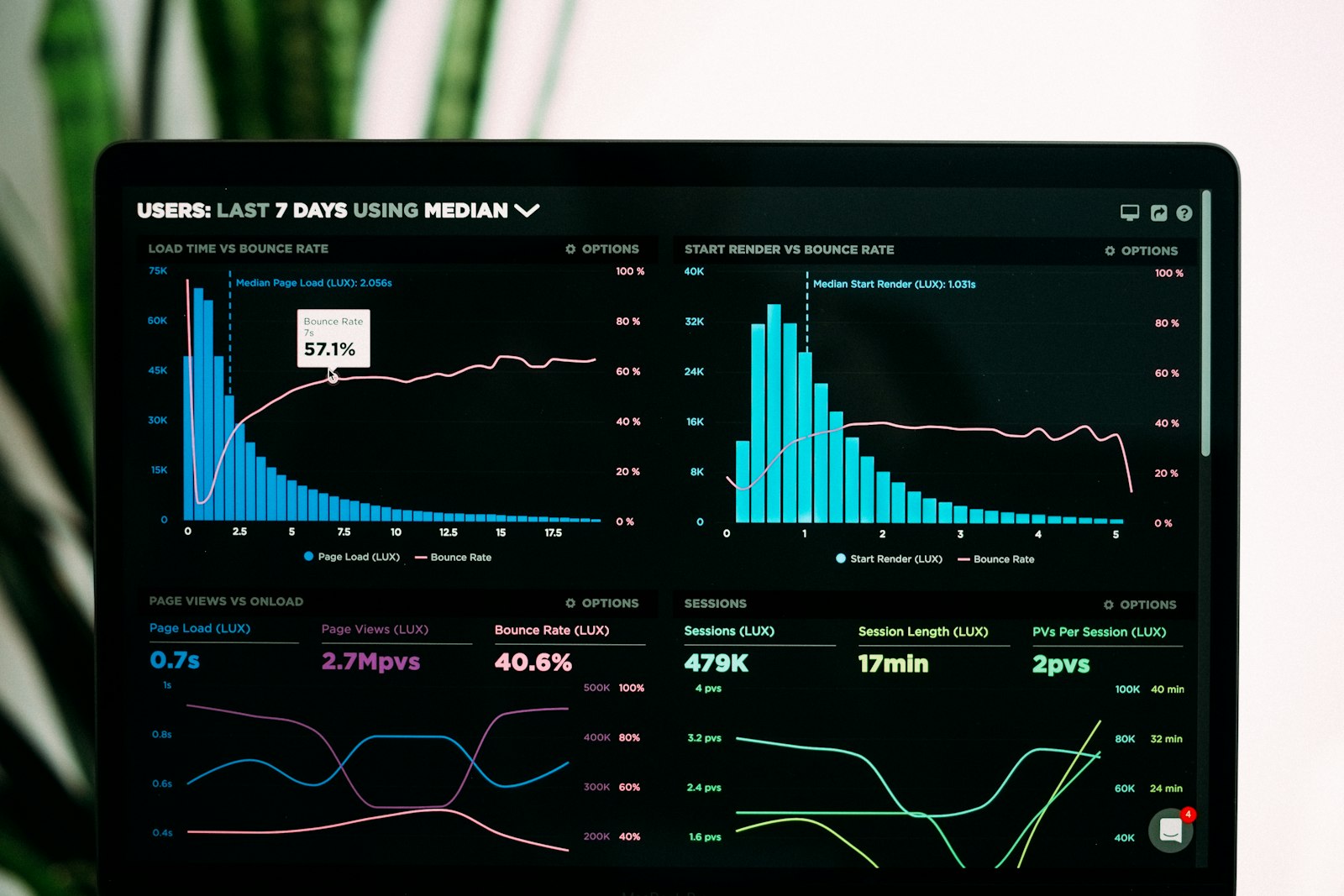
- Observability: per-request logs of latency, token cost, model used, retrieval hits, and outcome. A dashboard your on-call reads.
- Prompt versioning: every prompt has a version, every request log includes which version ran, and rolling back is one command.
- Cost cap with alerting: daily and per-tenant token spend ceilings that page someone when crossed.
- Audit trail: every input, output, model version, and downstream action stored for compliance review.
- Runbook: the markdown page your on-call reads when the system breaks at 2 a.m.
The cost of the stack is real. Adding it adds engineering time up front (1 to 4 weeks for a competent team), monthly tooling cost ($200-2,000 a month depending on volume and vendor), and ongoing maintenance.
The benefit is that the system can run unattended in front of real users without quietly degrading.
The question is when you need that benefit.
The four signals
Signal 1: real users, not employees
A demo for the CEO does not need LLMOps. A staging environment for QA does not need LLMOps. A tool used internally by 10 engineers who can DM each other when something breaks does not need LLMOps in any heavyweight form.
The threshold flips when external users are touching the system. Even 100 daily users will surface failure modes you cannot reproduce by hand. They will paste in characters your tokenizer mishandles. They will ask questions that exercise edge cases of your retrieval. They will hit the model with prompts that look fine but trigger bizarre responses.
Without observability, you find out about these the day a customer escalates. With observability, you find out the moment the failure rate ticks up.
Signal 2: real money on the line
The two flavors of “real money” are token spend and compliance exposure.
Token spend over $500 a month deserves cost monitoring. At $5,000 a month, deserves cost caps. At $50,000 a month, deserves a full LLMOps cost dashboard. Below those thresholds, manual review of the monthly bill is enough.
Compliance exposure is binary. If your system handles HIPAA-covered data, GDPR personal data, financial transactions, or anything subject to audit, you need an audit trail. The audit trail does not become more valuable as you scale. It is required from day one.
Signal 3: multiple people changing prompts
If one engineer owns the prompt and never deploys without testing, prompt versioning is overkill. The prompt is in git. The deploys are infrequent. The risk is bounded.
If three engineers and a non-technical PM all want to change prompts, you need versioning yesterday. The PM will edit the prompt to fix a customer complaint, ship the change, and silently break a workflow nobody tested against. Versioning plus an eval pipeline catches this within minutes instead of weeks.
The threshold is not a headcount; it is a pattern. The day someone deploys a prompt change without running the eval pipeline, you need the eval pipeline to be mandatory, which means it has to be cheap to run.
Signal 4: model providers change without warning
This one is sneaky. OpenAI, Anthropic, and Google all version their models, but they also occasionally retrain or update guardrails on the same model name. A prompt that worked perfectly on one model snapshot can drift over time as the underlying weights change.
If you are running on a single provider’s API and never plan to swap, you can mostly ignore this. If you have shipped anything for over six months, you have probably already hit it.
The fix is automated eval runs on a schedule (weekly is common), with the same eval set you used at deploy time. Drift shows up as eval scores drifting. Without scheduled evals, drift shows up as customer complaints six weeks after the silent retraining.
What “lighter LLMOps” looks like
For systems that fail one or more signals, here is what we ship instead of the full stack:
- Eval pipeline: a single Python script with 20 example inputs and expected outputs, run manually before each deploy. Takes an hour to build, costs nothing to run, catches the obvious regressions.
- Observability: log every model call to a file or a basic database with timestamp, prompt hash, latency, and token count. Don’t build dashboards. Read the logs when something is weird.
- Prompt versioning: prompts in a
prompts/directory in your git repo, file SHA stamped into request logs. No vendor needed. - Cost monitoring: monthly review of the OpenAI/Anthropic dashboard. Sentry-style alert if a single API call exceeds N tokens (catches runaway loops).
- Audit trail: skip unless compliance requires it. The cost is real and the value is zero for non-regulated systems.
- Runbook: skip until the system has actually broken once. Then write the runbook based on what you actually did.
Total cost of the lighter stack: under a day of engineering time and zero recurring fees. It is enough for an internal tool with 50 users, a B2B feature in alpha, or an MVP that is testing whether the concept works.
What full LLMOps looks like
For systems that hit multiple signals, the full stack is non-optional. Concretely:
- Eval pipeline: 100-500 example pairs, automated CI on every PR, deploy blocked if any regression test fails below threshold. Includes adversarial examples (prompt injection attempts, edge case data).
- Observability: vendor (LangSmith, Helicone, Langfuse, or Arize) with per-tenant filtering, latency p50/p95/p99 tracking, cost-per-tenant breakdown, and alerts wired to the on-call rotation.
- Prompt versioning: vendor or in-house, with the ability to A/B test prompt changes against real traffic before full rollout.
- Cost cap with alerting: per-tenant monthly cap (so one bad actor does not consume your whole budget), per-day org-level cap, and per-request token cap (so runaway loops trip immediately). Alert thresholds at 50/80/100 percent of cap.
- Audit trail: every input/output stored encrypted, retention policy matches compliance requirement (90 days for non-regulated, 6 years for HIPAA, etc.), retrievable per user request for GDPR.
- Runbook: markdown page in the team wiki, top-five failure modes with dashboard symptoms, escalation contacts, rollback commands. Reviewed quarterly.
Building the full stack from scratch is a 3-6 week engineering project. Buying it via vendors is a 1-2 week integration. We almost always recommend buying.
A common anti-pattern
Teams build the full stack on day one for an MVP that has 8 users and $20 of monthly token spend. The eval pipeline is more code than the product. The observability dashboard nobody looks at. The audit trail nobody will ever read.
The cost of this is not just engineering time wasted. It is the systems that never ship because the team is debugging the LLMOps stack instead of the actual product. We have seen this kill projects.
The opposite anti-pattern is teams that ship to 50,000 users without observability and discover three months in that the system has been hallucinating for half of those users on a specific prompt path that no one ever tested manually.
The framework above is meant to keep you out of both ditches. Match the LLMOps weight to the system’s actual stage and risk profile.
When in doubt
A useful default: build the lighter stack, ship to real users, and watch for any of the four signals firing. The day one fires, upgrade. The cost of upgrading later is real but manageable. The cost of upgrading earlier than necessary is shipped products that don’t.
LLMOps is engineering, not religion. It earns its keep when the signals fire. It costs more than it returns when they don’t.


Ready to scope something?
The first call is free. The quote is fixed. The team is senior.
Start a scoping call →